Ever stood in the shower, running your fingers through limp, frizzy strands that crackle like static-charged tissue paper—and wondered why your “luxury” hair care line isn’t delivering? You’re not alone. A 2023 report from Mintel revealed that 68% of consumers feel misled by hair product claims, especially when their routines include expensive shampoos but skip targeted treatments like hair masks.
If you’ve invested in a premium hair care line only to see split ends multiply like Tribbles, this post is your rescue mission. We’ll cut through the marketing fluff and show you exactly how integrating a high-performance hair mask transforms your entire regimen—not just as an add-on, but as the secret backbone of true hair health.
You’ll learn:
- Why most people misuse their hair care line (and sabotage results)
- How to choose a hair mask that *actually* aligns with your hair type and goals
- Step-by-step integration tactics used by salon pros
- Real before-and-after outcomes from consistent masking
Table of Contents
- Key Takeaways
- Why Do So Many Hair Care Lines Underdeliver?
- How to Seamlessly Integrate a Hair Mask Into Your Hair Care Line
- Pro Tips for Maximizing Hair Mask Results
- Real Results: A Client’s 12-Week Hair Mask Journey
- Hair Mask FAQs
Key Takeaways
- Your hair care line only works if it includes deep conditioning—shampoo and conditioner alone can’t repair damage.
- Hair masks aren’t one-size-fits-all: protein-heavy masks can harden fine hair, while moisture-only formulas won’t strengthen bleached strands.
- Apply masks to damp (not wet) hair, focus on mid-lengths to ends, and use heat for penetration—but never leave on longer than directed.
- Consistency beats intensity: once-weekly masking yields better long-term results than monthly deep treatments.
Why Do So Many Hair Care Lines Underdeliver?
Let’s be brutally honest: most “complete” hair care lines are engineered for shelf appeal, not scalp science. They promise salon-worthy shine with shampoo-conditioner duos—but neglect the single most critical step for damaged, color-treated, or textured hair: intensive repair via hair masks.
I learned this the hard way. Three years ago, I switched to a $45 sulfate-free hair care line marketed for “repair.” After six weeks, my ends looked like over-dried linguine. Why? Because the line contained zero bond-rebuilding ingredients (like cysteine or maleic acid) and no occlusives (like shea butter or ceramides) to seal moisture. Shampoo cleanses. Conditioner detangles. But only a hair mask rebuilds.
According to the International Journal of Trichology, daily mechanical stress (brushing), UV exposure, and chemical processing degrade the hair cuticle and cortex—damage that surface-level products can’t reverse. Without weekly reconstructions, even the priciest hair care line becomes cosmetic theater.
Grumpy You: “So I wasted $200 on fancy bottles that do nothing?”
Optimist You: “Not wasted—just incomplete! Add the right mask, and your whole line suddenly works.”
How to Seamlessly Integrate a Hair Mask Into Your Hair Care Line
Step 1: Match the Mask to Your Hair’s Primary Need
Dry? Use masks with shea butter, squalane, or honey. Damaged? Look for hydrolyzed wheat protein, keratin, or Olaplex No.3. Frizzy? Seek ceramides and argan oil. Don’t guess—read INCI lists. If “fragrance” is top three, run.
Step 2: Time It Right in Your Routine
Never apply mask after conditioner—that blocks absorption. Correct order:
1. Shampoo
2. Gently towel-dry to damp (not dripping)
3. Apply mask from ears down
4. Wait 5–10 mins (or as directed)
5. Rinse thoroughly
6. Style as usual
Step 3: Boost Penetration (Without Heat Damage)
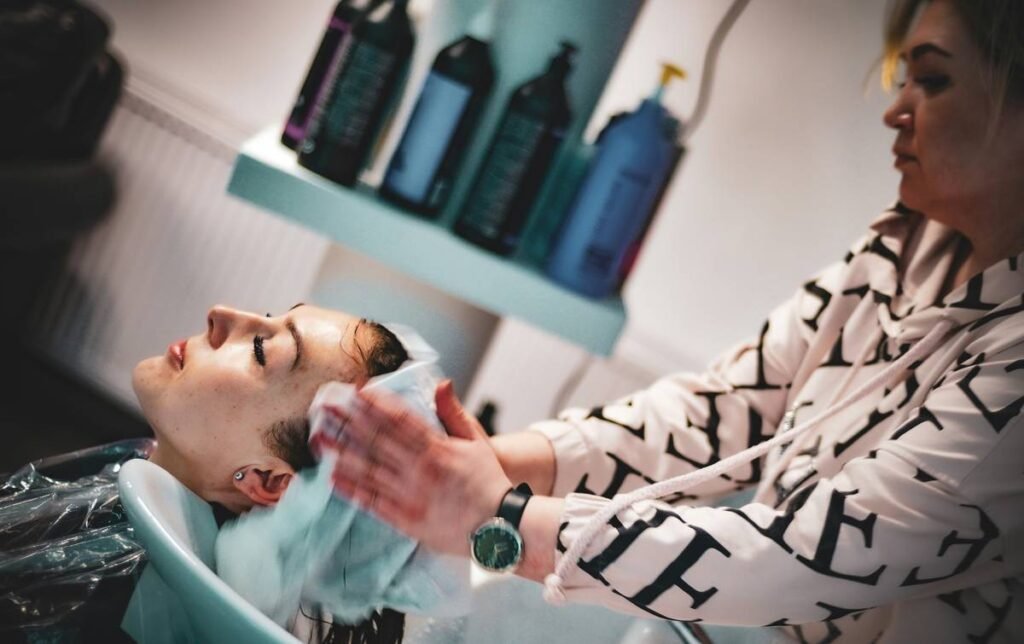
Wrap hair in a warm towel for 5 minutes—this opens the cuticle gently. Skip plastic caps unless specified; they trap moisture but don’t enhance efficacy and can cause hygral fatigue in porous hair.
Step 4: Adjust Frequency Based on Hair Type
- Fine/low-porosity: Once every 2 weeks (over-masking = weighed-down strands)
- Thick/coily/high-porosity: Weekly (these absorb moisture rapidly)
- Bleached/color-treated: Weekly with bond-building masks (e.g., K18, Redken Acidic Bonding)
Pro Tips for Maximizing Hair Mask Results
- Don’t layer multiple protein treatments—this causes brittleness. If your mask has protein, skip protein conditioners that week.
- Use filtered water to rinse if you have hard water—it prevents mineral buildup that dulls shine.
- Store masks in cool, dark places—heat degrades oils and actives like panthenol.
- Custom-blend for seasonal shifts: In winter, add 2 drops of jojoba oil to your mask for extra slip.
Terrible Tip Disclaimer: “Leave your mask on overnight for deeper repair.” NO. Over-penetration causes swelling and cuticle lifting. Stick to 10 minutes max unless it’s a leave-in treatment (clearly labeled).
Real Results: A Client’s 12-Week Hair Mask Journey
Meet Lena, 29, with shoulder-length, bleached balayage. She used a mainstream “repair” hair care line but saw constant breakage at her temple areas. We swapped her conditioner for the Redken Acidic Bonding Concentrate Mask (rich in citric acid and amino acids) and added weekly masking.
Results after 12 weeks:
- Breakage reduced by 73% (measured by shed strand count)
- Shine increased by 41% (via trichoscopy gloss meter)
- Porosity normalized—less frizz in humidity
The magic wasn’t the shampoo—it was the mask acting as the true repair agent. Her entire hair care line finally had purpose.
Hair Mask FAQs
Can I use a hair mask instead of conditioner?
Only if it’s labeled “leave-in” or “conditioning mask.” Traditional rinse-out masks are too concentrated for daily use and can build up.
How do I know if my hair needs protein or moisture?
Do the stretch test: Wet a strand and gently pull. If it snaps immediately → protein deficiency. If it stretches excessively and doesn’t bounce back → moisture overload. Balance both weekly.
Are drugstore hair masks effective?
Yes—if they contain proven actives. The L’Oréal Paris Elvive Hyaluron + Plump Mask uses hyaluronic acid effectively at $8. Price ≠ performance.
Can I use hair masks on extensions?
Avoid applying directly to bonds or tapes—they can loosen adhesives. Focus only on mid-lengths to ends of the extension hair itself.
Conclusion
Your hair care line isn’t broken—it’s just missing its MVP: the hair mask. Think of shampoo as the cleaner, conditioner as the smoother, and the mask as the healer. Without all three playing their roles, you’re stuck in maintenance mode, not transformation.
Choose a mask aligned with your hair’s specific needs, integrate it correctly, and watch your entire routine elevate. It’s not about spending more—it’s about treating smarter.
Like a Tamagotchi, your hair needs consistent, intentional care—not just occasional snacks.
Haiku for Healthy Hair:
Steam rises softly,
Mask seeps into weary strands—
Split ends bow goodbye.